
A buying guide for used manual wheelchairs
Buying a Second-Hand Manual Wheelchair in Singapore: Check It Like a Repairer
A used manual wheelchair can save you money, as long as it fits the user and you know what it will take to put right. This guide shows you how to check one the way a repairer does, and how to sort everything you find into three answers: price it in, confirm first, or walk away. If you then ask us about a chair, send the user's height and weight, your door and lift widths, where the chair will be used and your budget.
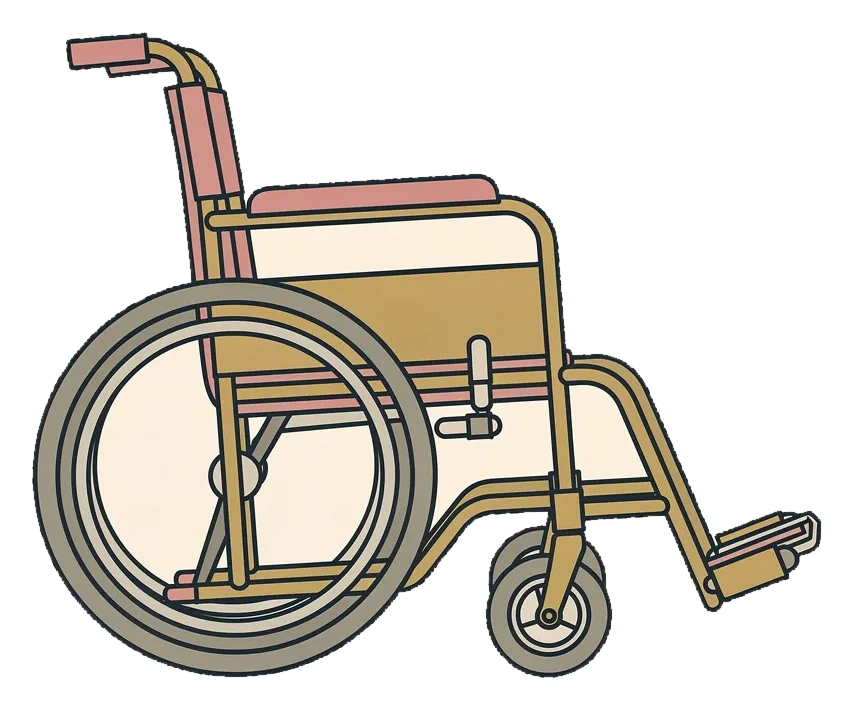
Looking for a used electric wheelchair, a dual-function chair or a mobility scooter? This guide covers manual chairs only. See our second-hand PMA page.
We repair manual and electric wheelchairs at the user's home, anywhere in Singapore, and Kelvin is the qualified engineer who carries out our repairs on site. This guide takes the checks from published wheelchair inspection checklists and sorts each finding by what it would take to put right, so you can decide before you pay a seller anything.
Manual or powered: which second-hand chair do you need?
Settle this first, because it decides which kind of chair you are checking, and which of our pages you need.
A manual chair needs someone to move it: the user, or a helper who is with them most of the time. If neither of them can do that, it is worth asking whether a powered chair would suit the user's day better. The Agency for Integrated Care (AIC) uses a similar test for its subsidy on motorised devices: one condition is that the senior is unable to use a manual wheelchair on their own (as at November 2026).
Thinking about a powered chair instead? Read our guide to automatic wheelchairs.
Fit first: measure the user, the home and the journey before you look at price
A chair that does not fit the user is no bargain at any price. Take three body measurements and two door widths before you look at any listing, and you only need to check the chairs that could fit.
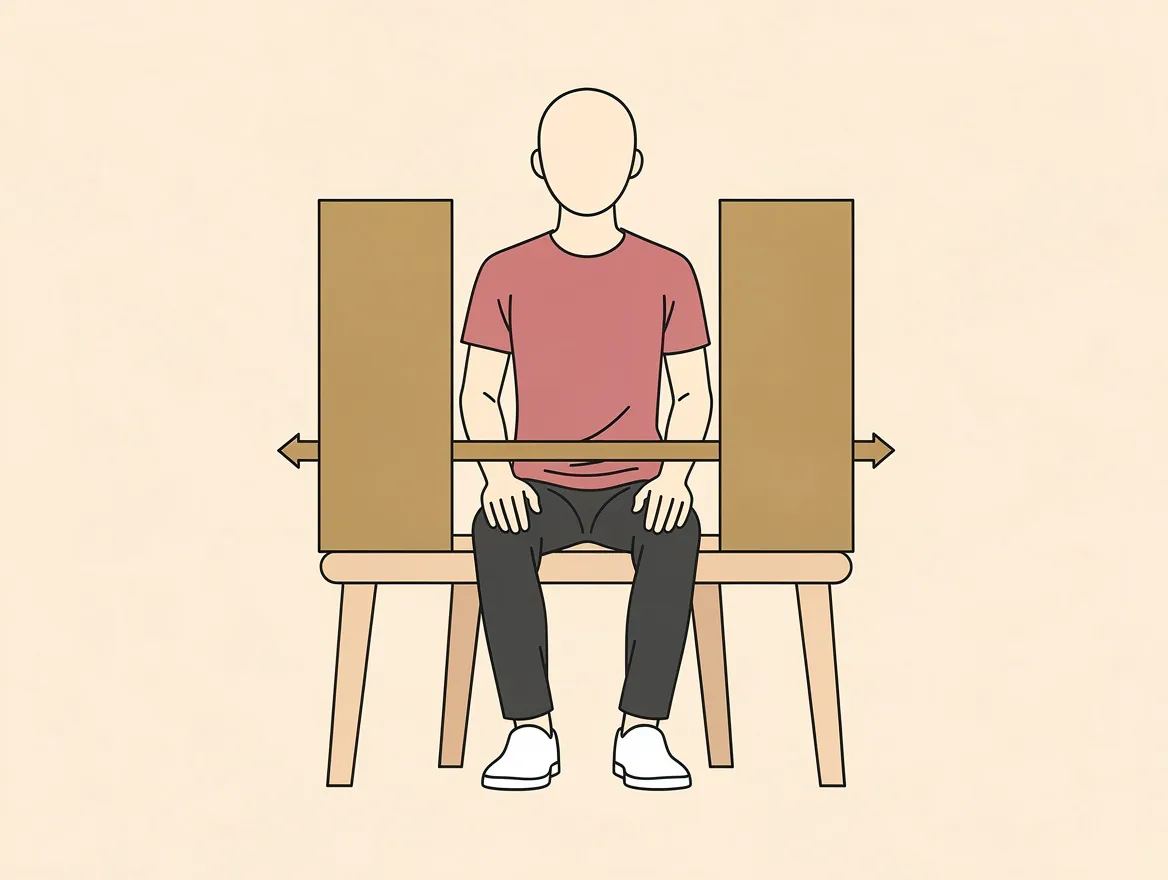
Hip width gives the seat width
Empty the user's pockets, sit them upright and measure across the widest part of the hips or thighs, with a book or board held flat against each side. The WHO method takes this as the seat width, and says to keep the seat no wider than the user needs.
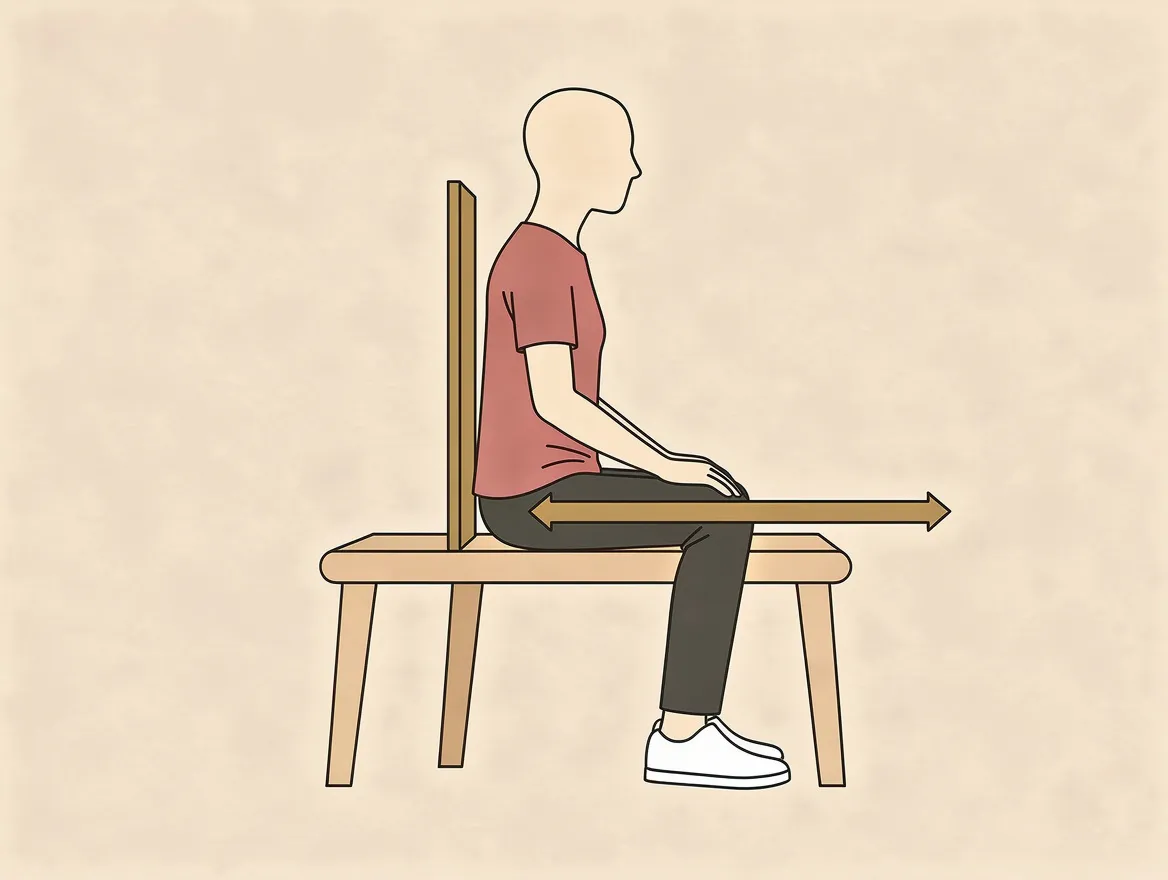
Thigh length gives the seat depth
Hold a board behind the user's back and measure in a straight line from the back of the pelvis to the back of the knee, on both legs. Take 3 to 5 cm off the shorter one. That is the seat depth to look for.
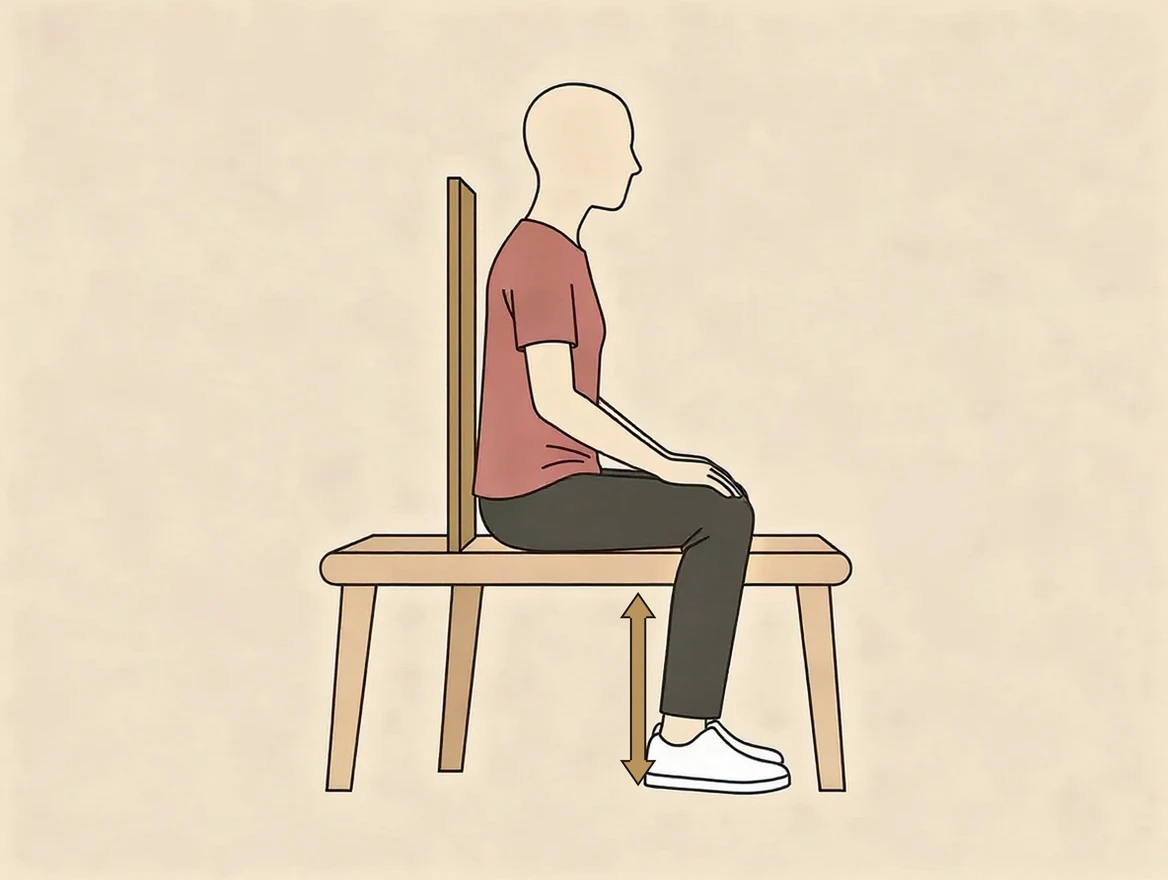
Calf length gives the footrest height
Measure from the back of the knee to the base of the heel, both legs, ankles bent at a right angle if possible, in everyday shoes. The footrests must adjust to this distance below the cushion top. If the user moves the chair with their feet, this is the height from cushion top to floor instead.
How tall the backrest should be depends on how much support the user needs, so this guide gives no figure for it. The WHO's basic method is meant for users who do not need extra support to sit upright. If the user does need that support, has had or is at risk of pressure sores, or will sit in the chair all day, have a therapist assess them before you choose any chair, used or new.
An assessment by an approved healthcare professional is also part of applying for AIC's Seniors' Mobility and Enabling Fund. If the user cannot sit for the measurements, a therapist can take them.
The measuring method follows the World Health Organization's Wheelchair Service Training Package, basic level, and its wheelchair assessment form. See the WHO publication.
Measure the narrowest door the chair must pass through, which is often the bathroom door, and the lift door. Compare them with the chair's overall width, wheels included, not with its seat width.
If the user travels by MRT, LRT or bus
LTA counts a wheelchair as a personal mobility aid, and allows one on trains and public buses when it is within these limits (as at November 2026). Check a chair against them yourself before you buy.
- Length
- Up to 120 cm
- Width
- Up to 70 cm
- Height, floor to top of chair or seated user's head
- Up to 150 cm, whichever is higher
- Weight, with the user
- Up to 300 kg
Limits can change. Check LTA's page on public transport for wheelchair users for the latest.
Check that the chair folds and fits the boot of the car it will travel in. When you book a taxi or a ride-hailing car, ask for one with room for a folded wheelchair.
Write down these numbers to check each chair
- Hip width
- Seat depth, from the shorter leg
- Calf length, from both legs
- The narrowest door width at home
- The lift door width
At the seller's door, measure the chair's seat width, its seat depth, how far its footrests adjust and its overall width, and compare them with your numbers. If the chair does not fit, you need not check anything else.
Check it at the seller's door: price it in, confirm first, or walk away
Most checklists tell you to look at the frame, the brakes and the tyres. A repairer goes one step further and decides what each finding means for your money. Sort everything you find into one of three answers.
Fold it and open it again
The cross braces are the X-shaped bars under the seat that let the chair fold. One that sticks but frees with gentle use: confirm first. One that will not free at all: walk away.
Sight down the seat rails
Look along the two tubes the seat hangs from. Any crack: walk away. A bend: confirm first, because we fix a bent frame.
Check both footrests too: a bent footrest is confirm first. Then check the centre pin that joins the cross braces. A loose pin: confirm first.
Pump the tyres, then test the brakes
Soft tyres can make good wheel locks look weak, so pump the tyres first. Put on each wheel lock, the brake beside each big wheel, and try to push the chair: each lock should hold its wheel still. A lock that still slips: confirm first.
Spin each big wheel
Watch the rim as it turns. A wheel that wobbles or is bent, a worn or flat tyre, or a gap between tyre and rim: price it in, as a wheel or tyre change. Then rock a straight wheel sideways: if it moves at the hub, the bearings may be worn: confirm first.
Check the small front wheels
A worn or cracked castor wheel: price it in, as a castor change. A bent castor fork, a loose castor stem, or a castor that wobbles from side to side as the chair moves: confirm first.
Check the seat and back
The seat and back material should be snug on the frame, with no rips or tears. Slack, sagging or torn material: confirm first.
Do the roll test
On a level floor, give the chair one straight push. If it drifts more than about 30 cm to one side over 3 metres, the frame may be damaged. That is not proof, but our advice is to walk away.
Worn tyres, inner tubes, castors and wheels are routine jobs. We change a wheel, a tyre or a castor on a manual wheelchair as a job on its own, at the user's home, anywhere in Singapore. A bigger job is sometimes done at our Tampines workshop, and we collect and return the chair.
A home visit starts with our $30 on-site assessment, and our repair work carries a one-week goodwill warranty. So a used chair with a sound frame and worn tyres can still be a good buy once those parts are in the price.
Before you pay, send us a photo for a rough idea of the cost. We do not inspect a chair you are buying from someone else, so a firm quote for a fault to confirm first must come from a repairer who can see the chair.
The last part of this page shows how.
More on tyre and wheel jobs: wheelchair tyre and wheel replacement.
Do we fix these confirm-first faults on a manual chair?
Yes. Besides tyres, inner tubes and small front wheels, we fix or adjust brakes, replace the seat or back cushion, change worn bearings and castor forks, and fix a bent frame or footrest.
These stay faults to confirm first, because the cost depends on what we find when we see the chair. Send us a photo of the fault on WhatsApp for a rough idea.
Why walk away
A cracked seat rail and a cross brace that will not free are faults in the frame itself, and drift in the roll test is a reason to suspect one. For these, our advice is not to buy. A bend is different: we fix a bent frame, so a bend is a fault to confirm first, with a repairer's yes and a firm quote before you pay.
The choice is always yours.
The real cost: asking price, everything it needs now, and two checks before you pay
An attractive asking price is only where the cost of a used chair starts. The real cost is everything you pay before the chair is ready for the user.
Check that every part is there
- Both footrests, to support the user's feet
- Both armrests, if the user leans on them
- Both wheel locks (the brakes), with their rubber tips
- The push handles and their grips, if a helper will push
Before you pay, get a quote for a replacement that fits this chair, fitting included. Once you have that quote, price the missing part in. Until then it belongs with the faults to confirm first, and if no one can quote it before you pay, treat it as walk away.
Add up the real cost
Ask a repairer who has seen the chair for one written quote that covers every part and job you found to price in or to confirm first, including fitting and any visit charge, so nothing is left out. A photo sent to us gives a rough idea only. Then add the three lines below.
- Asking price
- What the seller wants
- Parts and jobs it needs now
- From your one written quote
- Getting it home
- Transport, if it will not fit your car
- Real cost
- All three added together
To compare with a new chair, see wheelchair prices in Singapore.
As at November 2026, AIC's Seniors' Mobility and Enabling Fund (SMF) can pay up to 90% of the cost of a wheelchair if the user is a Singapore Citizen or PR aged 60 or over, does not live in a nursing home, and has a household monthly income of $4,800 or less per person. An approved healthcare professional assesses the user first, and the application must be approved before you buy: AIC says purchases made in advance cannot be reimbursed.
So ask before you pay for any chair, because a subsidised new chair may cost you less than a used one. Whether SMF can help with a second-hand chair is a question to put to AIC.
Subsidy rules can change. Check SMF on the AIC website for the latest.
As at November 2026, SG Enable's Assistive Technology Fund can help pay to buy or to repair a wheelchair for a Singapore Citizen or PR with a permanent disability, after a means test and an assessment by a therapist or another assessor. Seniors who did not use this fund before turning 60 are supported through SMF instead.
If the chair is needed for only a few weeks or months, borrowing may cost less than buying. One example is HWA, formerly the Handicaps Welfare Association: as at November 2026, its public rate to lend a standard wheelchair is a S$150 refundable deposit and S$21.80 a month, plus a S$21.80 administrative charge that is not refunded. Rates are different for HWA members and for foreigners.
Questions to ask the seller, and terms to settle, before you pay
What the seller tells you should match what your checks found. Ask these before any money changes hands.
Ask DrWheelchair about a used manual wheelchair
If you would like to ask us about a used manual wheelchair, one WhatsApp message with the right details lets us answer you properly.
Send us these details
- The user's height and weight
- The narrowest door width at home, and the lift door width
- Where the chair will be used: home, outdoors, car or taxi, or public transport
- Your budget
Yes. We sell used manual wheelchairs, and every one is checked first and its worn parts replaced. A catalog coming soon on this site will show our used units, including sold ones marked as sold.
Until then, ask us on WhatsApp with the details above.
Buying a used manual wheelchair from us: it comes with a one-month warranty, and you can return it within a few days if it does not suit the user.
If a new chair suits the user better, WhatsApp Kelvin on 9636 1497.
Send us a photo of the whole chair and a short note of what your checks found: what you would price in, what needs confirming first, and any missing parts. The photo gives us a rough idea of the jobs, not a firm quote: for that, a repairer needs to see the chair. We repair manual wheelchairs at the user's home, anywhere in Singapore, and sometimes at our Tampines workshop, where we collect and return the chair.
Will you look at a chair before I buy it?
No. We do not inspect a chair you are buying from someone else.
For a fault to confirm first, ask the seller to let a repairer see the chair before you pay. If no repairer can confirm the fix and its cost before you pay, our advice is to walk away. Once the chair is yours, we can repair it.
Who does the work
Our team brings more than thirty years of combined experience, and Kelvin is the qualified engineer who carries out repairs on site.
Wheelchair repair at your home
How a repair works, for manual and electric chairs.
About DrWheelchair
Who we are and how we work.
9 am to 5 pm, 7 days a week. We are often out on site, so please book an appointment before you visit the workshop.
9002, Tampines Street 93, #04-66, Tampines Industrial Park A, Singapore 528836