
A starting point for families choosing a manual wheelchair
Choosing a Manual Wheelchair in Singapore
You do not need model names to start. Two questions narrow it down: who will move the chair on a normal day, and the narrowest place it has to pass. Then send your answers to Kelvin on WhatsApp.
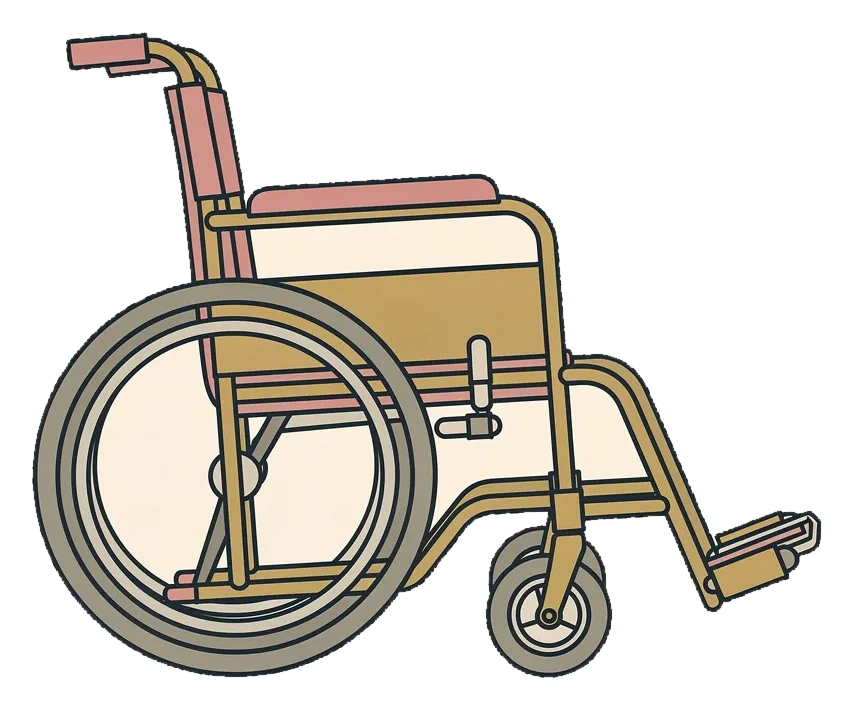
This page helps you work out what kind of manual wheelchair to ask about. WhatsApp Kelvin on 9636 1497. This page gives no prices: Kelvin can give you one once he knows what the user needs.
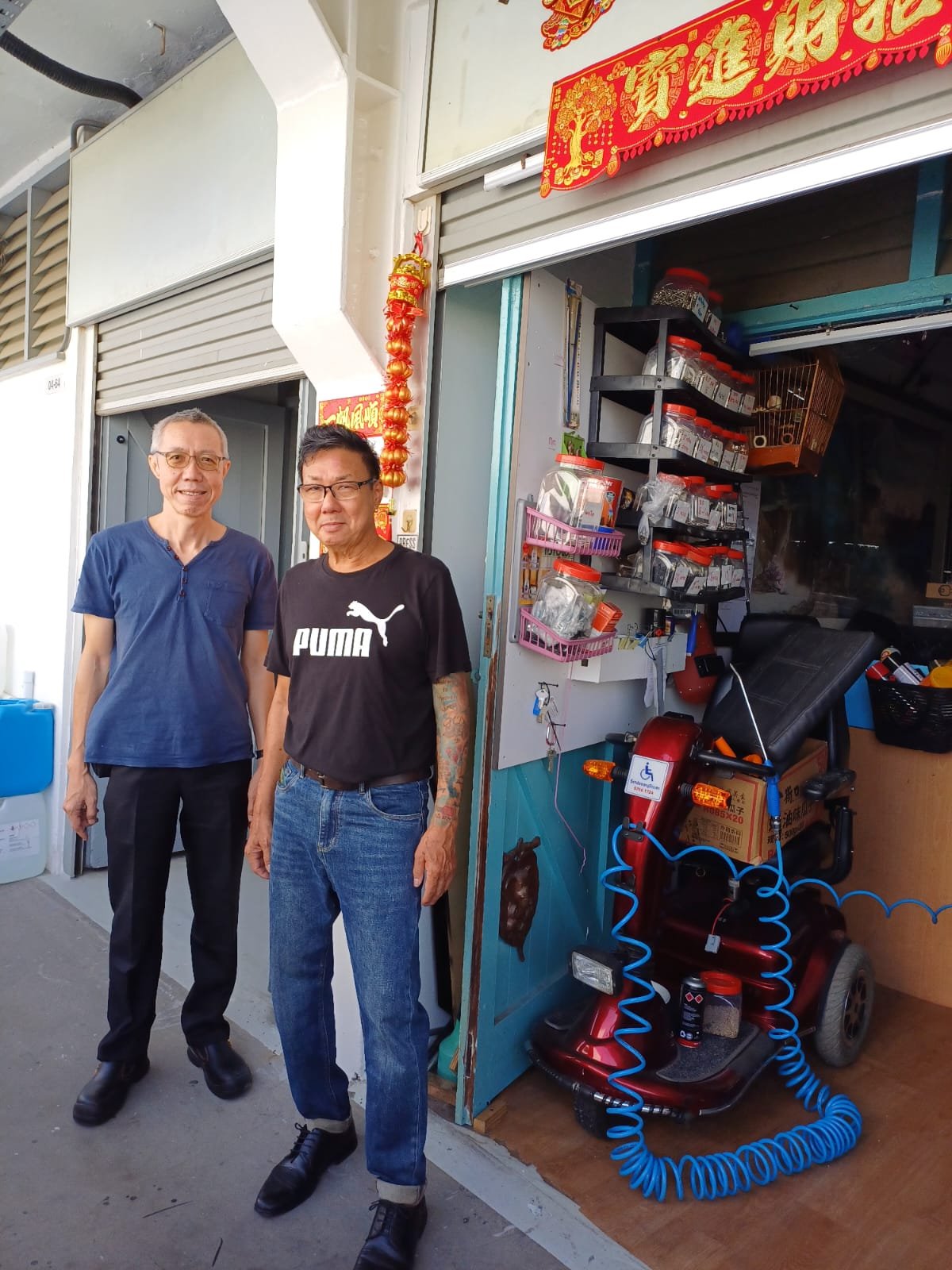
DrWheelchair is Kelvin and Steven's workshop in Tampines. In June 2025 Kelvin was invited to teach a basic wheelchair servicing workshop for active seniors at NTUC Health Active Ageing Centre (Woodlands East).
Sections 2 to 7 each end with one line to copy. Near the end of the page, those lines are gathered into one WhatsApp message for Kelvin on 9636 1497.
What this page walks you through
- Who moves the chair decides between a self-propelled and a helper-pushed wheelchair.
- A handful of measurements describe every chair, and LTA sets a size limit for paths, buses and trains.
- Your own doors, lift and car boot show whether a chair will fit your routine.
- The user's daily routine tells you which accessories to ask about.
- If nobody can push a manual chair for the trips that matter, an automatic wheelchair may suit better.
- There is help with the cost, and for SMF you must apply and be approved before you buy.
- Your answers become one WhatsApp message to Kelvin.
Self-propelled or helper-pushed: who moves the chair on a normal day
A manual wheelchair comes in two kinds, and the first question picks between them: who will move the chair on a normal day?
Often the same chair, with different wheels
The difference can be as small as the rear wheels. One overseas maker's sheet, for example, offers the same standard chair with 12.5-inch rear wheels as a transit chair, or with 24-inch rear wheels so the user can self-propel. That is an example of how the two kinds differ, not a recommendation.
Weight and folded size vary from model to model, so ask for the figures of the exact version you are looking at. The next section explains which figures matter.
Questions about your normal day
- Will the user move around alone at home, outside, or both? A user who will push alone needs a self-propelled chair. If the user pushes at home but needs a helper outside, mention both places in your message.
- Is a helper with the user on every trip? If so, a helper-pushed chair can work, but only while someone is there to push it.
- How far, and how hilly, are the usual routes: the HDB corridor, the void deck, the market? Long or sloping routes are harder for whoever pushes, so describe them in your message.
If nobody can push it
If neither the user nor a helper can move a manual chair for most of the day, go straight to the section on automatic wheelchairs further down this page.
Wheelchair dimensions: the numbers on every chair, and the Singapore size limit
Every chair is described by the same handful of measurements. These are the wheelchair dimensions that matter in Singapore, because they let you check a chair against your home, your car and LTA's size limit.
One example, so you know what to look for
Here is how one maker measures one standard manual wheelchair. It shows how a chair is described, not which chair to buy, and the maker says its specifications can change without notice. The centimetre figures are our own conversions from the sheet's inches, rounded.
- Seat width
- 18 in (about 46 cm)
- Seat depth
- 16 in (about 41 cm)
- Seat to floor
- 19.5 in (about 50 cm)
- Overall width
- 24.8 in (about 63 cm)
- Overall length
- 42 in (about 107 cm)
- Overall height
- 36 in (about 91 cm)
- Folded width
- 10.6 in (about 27 cm)
- Chair weight
- 19.5 kg
- User weight limit
- 150 kg
What each number tells you
Use them to check a chair against the places it must go.
- Seat width and seat depth
- The size of the seat. Which size suits the user is for the supplier or a healthcare professional to work out.
- Seat to floor
- How high the seat sits off the ground.
- Overall width
- Whether the chair passes your doors. It is always wider than the seat.
- Overall length
- Whether the chair fits in your lift.
- Overall height
- The chair alone. LTA's height limit counts the user seated in it.
- Folded width
- Where the chair can be stored, and whether it fits the car boot.
- Chair weight
- What someone has to lift into a car.
- User weight limit
- The heaviest user the chair is made for.
The Singapore size limit
LTA counts a manual wheelchair as a personal mobility aid, or PMA: its list of PMAs includes manual wheelchairs, motorised wheelchairs and mobility scooters. From 1 June 2026, every PMA used on public paths must stay within the limits below. LTA sets the same limits for buses and trains.
- Width
- No more than 70 cm
- Length
- No more than 120 cm
- Height
- No more than 150 cm, from the floor to the top of the chair or the seated user's head, whichever is higher
- Laden weight
- No more than 300 kg, including the user
What this means for a manual chair
The example chair's width (about 63 cm) and length (about 107 cm) sit inside the 70 cm and 120 cm limits. That says nothing yet about height or weight.
Height is measured with the user seated, and the 300 kg counts the chair and the user together. Check all four numbers for any chair you consider, especially one with a wider seat or an added attachment.
These limits are from LTA's rules page as read on 29 October 2026 and its public transport page as read on 17 November 2026, and rules can change. Check LTA's rules for personal mobility aids and LTA's page on inclusive public transport for the latest.
Will it fit? Doors, lifts, storage, the car and public transport
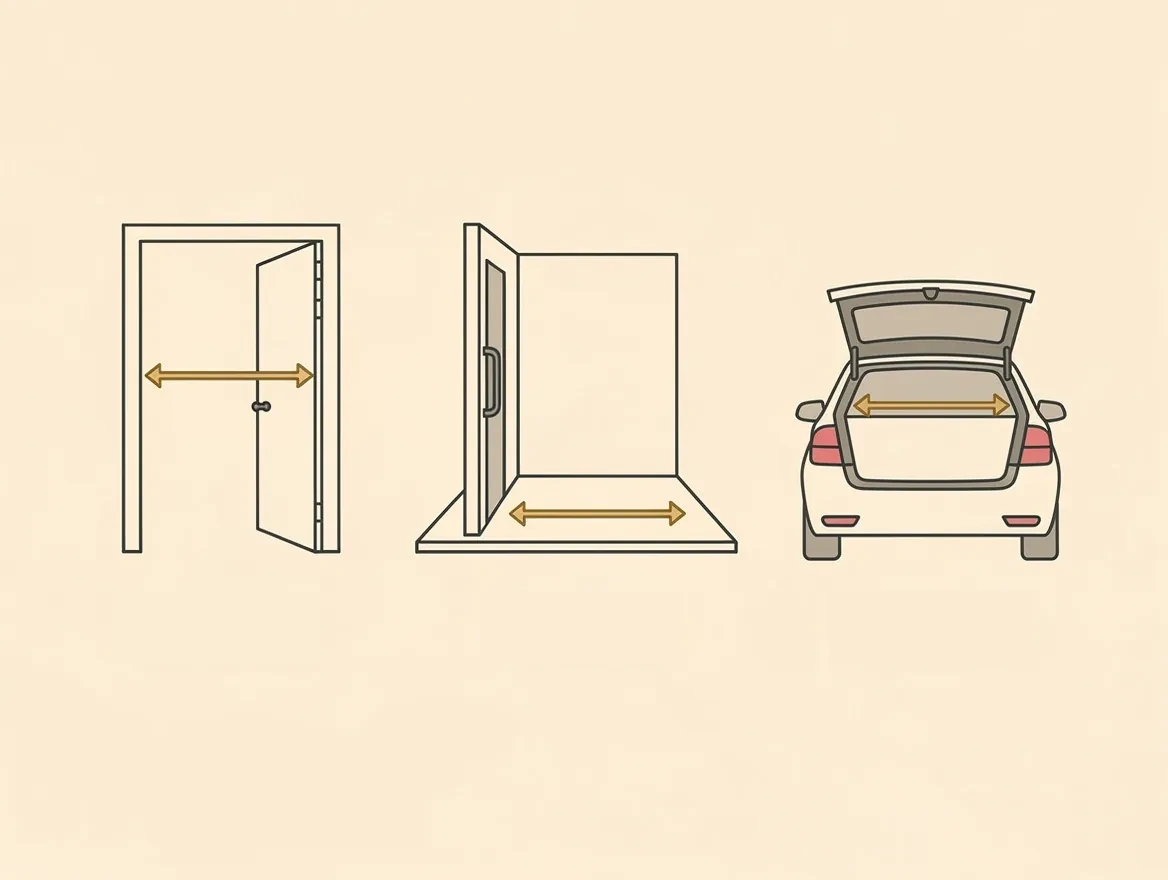
Measure before you choose. Every home, lift and car is different, so your own tape measure is the best guide here. Compare what you measure with the chair's numbers from the section above.
Wheelchair accessories that suit the user's routine
Start with what the user's day involves. When you look at wheelchair accessories in Singapore, these four parts of the day tell you which ones to ask about.
When a manual chair is not enough: look at an automatic wheelchair
Go back to the first question. An automatic wheelchair is worth a look if the user cannot move a manual chair alone and no helper can push it for the trips that matter, for example because the routes are too long or too steep for the helper. If a helper is with the user and can push for those trips, a helper-pushed manual chair may be enough.
AIC's conditions for a motorised device
AIC's SMF subsidy, set out in the next section, has extra conditions for a motorised device. For an SMF subsidy on one, AIC says the user must:
Not have a full-time caregiver or domestic helper to care for him/ her.
Be unable to use a manual wheelchair on his/ her own.
Be assessed to be mentally and physically able to use the motorised device safely.
These are AIC's conditions for the subsidy, and AIC decides each case. This page gives no view on whether a person qualifies. The automatic wheelchair guide covers batteries, motors and speed.
Help with the cost: apply before you buy
Aged 60 and above: SMF
AIC's Seniors' Mobility and Enabling Fund, or SMF, can subsidise mobility aids, including wheelchairs and pushchairs. If approved, SMF pays up to 90% of the device's cost, and never more than its set limit for that device.
The amount depends on the household's means test, and AIC says there will be an amount you need to co-pay. The means test is a check of household income.
- Nationality
- Singapore Citizen or PR
- Age
- 60 or older
- Where the user lives
- Not in a nursing home or MSF home
- Household income
- $4,800 or less a month per person, or a home with an annual value under $21,000 if there is no household income
The assessment
An approved healthcare professional, such as a registered therapist, nurse or doctor, assesses the type of equipment the user needs. AIC says the assessment fee ranges between $10 and $180 depending on your subsidy tier.
The application
If the user is cared for at a public or community hospital, day rehabilitation centre or senior care centre, the therapist or medical social worker there can apply with you. You can also apply online with Singpass, or on a paper form from an AIC Link.
The approval
AIC may take up to 15 working days to process a complete application, and tells you the outcome in writing. Buy the chair only after it is approved.
Under 60, with a disability
SMF is for seniors aged 60 and above. For a younger person with a permanent disability, SG Enable's Assistive Technology Fund gives means-tested subsidies for assistive devices, wheelchairs among them. It is for Singapore Citizens and PRs.
You apply through a public hospital or a social service agency, where a therapist assesses the need and a social worker helps submit the application. You can call SG Enable on 1800-8585-885.
Subsidy rules and figures can change. The details above are as at 17 November 2026. Check AIC's SMF page and SG Enable's Assistive Technology Fund page for the latest.
Ask Kelvin: send these answers on WhatsApp
You now have the answers to start the conversation. Copy the lines below, fill in the blanks, and send them to Kelvin on WhatsApp at 9636 1497.
Your message to Kelvin
- Who will move the chair: the user, a helper, or both.
- Our usual routes: __ (how far, and any slopes, ramps or kerbs).
- The user's weight is about __ kg, and height about __ cm.
- Narrowest door: __ cm wide.
- Space to keep the chair: __ cm wide.
- Lift: door __ cm wide, inside __ cm deep.
- Car boot: opening __ cm wide by __ cm high, __ cm deep (or: we travel by bus and MRT).
- Accessories we think we need: __
- We are also wondering about an automatic wheelchair: yes or no.
- SMF or another scheme: not applied, applied, or approved.
- Our budget: about S$__.
- Our questions: which chair would suit, when can we try one, and can we pay by instalments?
A photo of the narrowest doorway helps too. You can send it in the same WhatsApp chat.
What happens next
Your message goes to Kelvin. WhatsApp Kelvin on 9636 1497. Ask Kelvin about delivery, adjusting the chair to fit the user, and a warranty.
Ask Kelvin how long the warranty lasts for the chair you choose. You can try a chair at our shop before you buy.
Paying by instalments may be possible: ask Kelvin. A catalogue of our chairs, with prices, is coming soon.
Kelvin runs the DrWheelchair workshop in Tampines with Steven. Meet them on our About Us page. WhatsApp us on 9636 1497.
The workshop is at 9002 Tampines Street 93, #04-66, Tampines Industrial Park A, Singapore 528836. It is open from 9 am to 5 pm, 7 days a week. The team is often out on service calls, so please book on WhatsApp before you visit.
Other tasks, other pages
Need something else? Each of these has its own page.
Buying a used manual wheelchair
Our guide for families buying a chair second-hand.
What to budget for a wheelchair
Our guide to what a wheelchair costs.
A wheelchair that needs fixing later
Where to turn when a chair breaks down.
A used powered chair or mobility scooter
Our page on used powered chairs and mobility scooters.
A new powered chair
Our guide to choosing an automatic wheelchair.